National Costume Explained
The Bridal Veil
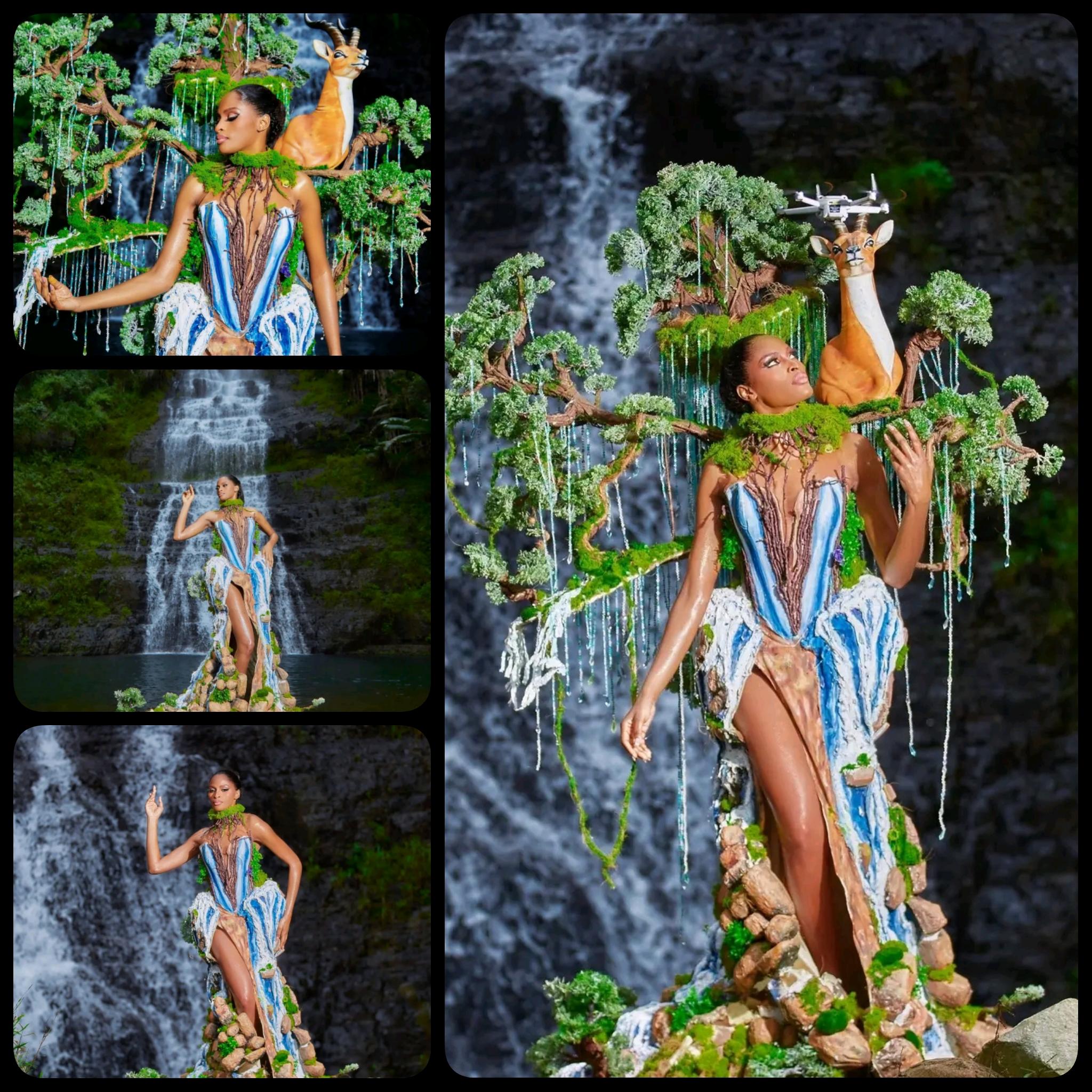
The Bridal Veil is a tribute to the timeless beauty, strength, and resilience of Bridal Veil Falls in Chimanimani, Zimbabwe. Inspired by one of the country’s most iconic natural landmarks,this costume celebrates the falls’ graceful, uninterrupted flow while honoring their remarkable story of survival.
The design reflects the aftermath of Cyclone Idai, which devastated Chimanimani in 2019, forever changing the surrounding landscape. Massive rocks and boulders, dislodged by the storm, now rest around the falls as enduring reminders of the destruction that once threatened this natural wonder. Yet, despite the devastation, Bridal Veil Falls remained standing, its waters continuing to cascade with elegance and purpose.
Like the people of Chimanimani, the falls embody resilience. They continue to provide fresh, crystal clear water that sustains the surrounding communities and sustain the rich vegetation, and support the survival of the region’s wildlife, symbolizing hope, renewal, and the enduring power of nature.Though their existence was once threatened, the falls continue to give life, demonstrating that even after great adversity, beauty and strength can endure.
The flowing waters of the gown represent the endless cascade of the waterfall, while the textured elements symbolize the rugged rocks surrounding the Falls. Together, these features tell a story of perseverance, remembrance, and rebirth.
In this Artwork, we celebrate the Totem called “Dziva from Zimababwe with the totem laudatory epithets which connects them to their gods,ancestors, bloodline, spirituality and their environment.
The Bridal Veil Gown is more than a costume. It is a celebration of survival, a tribute to the resilient spirit of Chimanimani, and a reminder that true beauty is not only found in grace, but also in the strength to keep flowing despite life’s greatest challenges.
Costume by Jaspizy Welcome
Miss Supranational
#MissSupranational #MissSupranational2026 #NowySacz #MalopolskaNational Costume Explained
The Bridal Veil
The Bridal Veil is a tribute to the timeless beauty, strength, and resilience of Bridal Veil Falls in Chimanimani, Zimbabwe. Inspired by one of the country’s most iconic natural landmarks,this costume celebrates the falls’ graceful, uninterrupted flow while honoring their remarkable story of survival.
The design reflects the aftermath of Cyclone Idai, which devastated Chimanimani in 2019, forever changing the surrounding landscape. Massive rocks and boulders, dislodged by the storm, now rest around the falls as enduring reminders of the destruction that once threatened this natural wonder. Yet, despite the devastation, Bridal Veil Falls remained standing, its waters continuing to cascade with elegance and purpose.
Like the people of Chimanimani, the falls embody resilience. They continue to provide fresh, crystal clear water that sustains the surrounding communities and sustain the rich vegetation, and support the survival of the region’s wildlife, symbolizing hope, renewal, and the enduring power of nature.Though their existence was once threatened, the falls continue to give life, demonstrating that even after great adversity, beauty and strength can endure.
The flowing waters of the gown represent the endless cascade of the waterfall, while the textured elements symbolize the rugged rocks surrounding the Falls. Together, these features tell a story of perseverance, remembrance, and rebirth.
In this Artwork, we celebrate the Totem called “Dziva from Zimababwe with the totem laudatory epithets which connects them to their gods,ancestors, bloodline, spirituality and their environment.
The Bridal Veil Gown is more than a costume. It is a celebration of survival, a tribute to the resilient spirit of Chimanimani, and a reminder that true beauty is not only found in grace, but also in the strength to keep flowing despite life’s greatest challenges.
Costume by Jaspizy Welcome
Miss Supranational
#MissSupranational #MissSupranational2026 #NowySacz #Malopolska



 Home
Home