

 Home
Home
Participation in the South Africa – Zimbabwe trade corridor for scalable, compliant and technology enabled growth
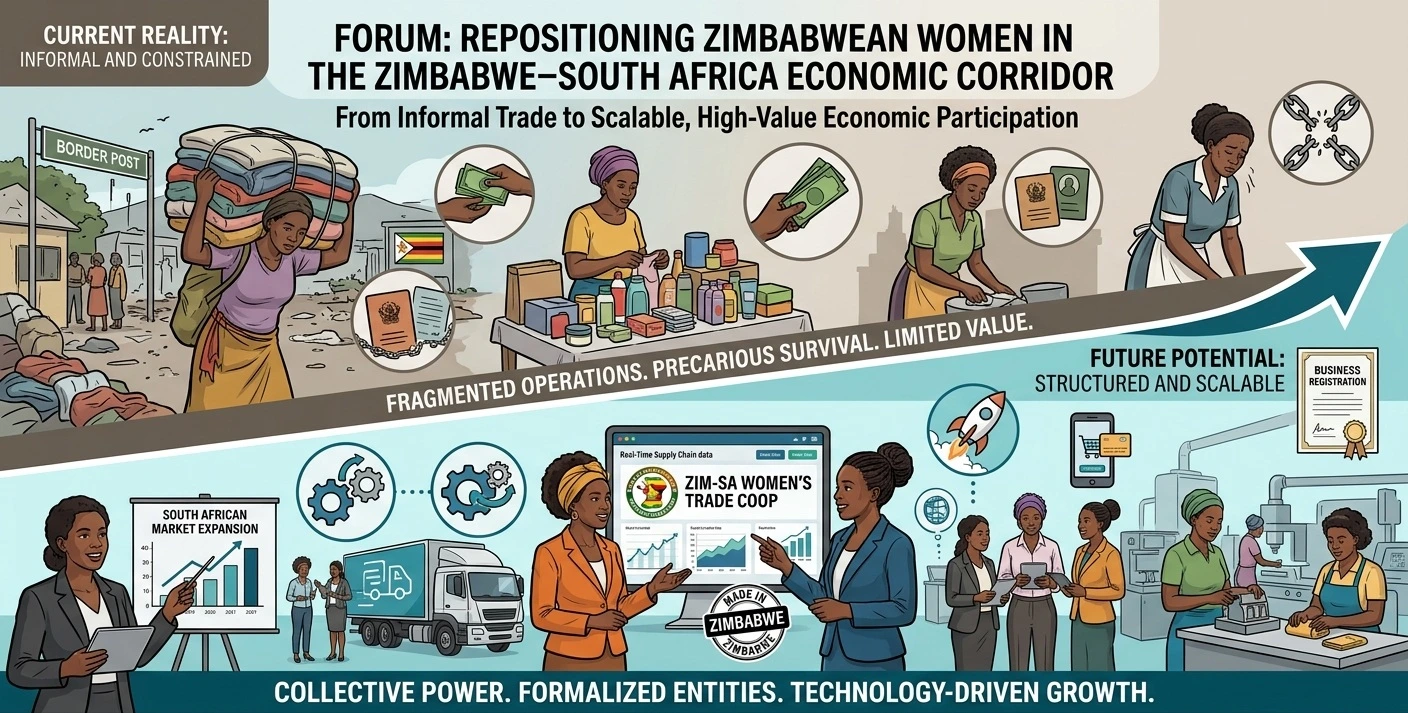
The economic relationship between Zimbabwe and South Africa is one of the most active and strategically significant trade corridors in Southern Africa. At the center of this corridor are women—traders, entrepreneurs, workers and informal economic actors—who sustain households, drive cross-border commerce and form the backbone of regional economic exchange.
For decades, Zimbabwean women have demonstrated resilience, adaptability and ingenuity in navigating this corridor. However, much of their participation remains informal, fragmented and constrained, limiting their ability to scale, accumulate wealth and fully benefit from the size and sophistication of the South African market.
This paper seeks to reposition Zimbabwean women not merely as participants in cross-border trade, but as structured economic actors capable of building scalable businesses, entering formal markets and leveraging technology to expand beyond physical borders.
Background: Women in the Zimbabwe–South Africa Trade Corridor
The flow of goods, services and people between Zimbabwe and South Africa has historically been driven by both formal and informal systems. Within this ecosystem, women have played a central role, particularly in:
- Cross-border trading of consumer goods
- Informal retail and resale markets
- Small-scale importation of clothing, foodstuffs and household items
- Labour migration into domestic work, caregiving, hospitality and other service sectors
South Africa’s more industrialized and diversified economy presents a wide range of opportunities—from access to wholesale goods and manufacturing inputs to employment and service contracts. For many Zimbabwean women, this has created a lifeline for income generation and family survival.
However, participation has largely been shaped by necessity rather than strategy. Women often enter the corridor as individual actors, operating with limited capital, minimal institutional support and little access to formal systems of finance, logistics, or legal protection.
The Current Reality: Informal Trade, Migration and Survival Strategies
Despite its scale and importance, the Zimbabwe–South Africa trade corridor is still heavily dominated by informal and semi-formal activities, particularly among women.
Key characteristics of the current reality include:
- Informal Cross-Border Trading:
Women frequently travel to South Africa to purchase goods for resale in Zimbabwe. These activities often operate outside formal import/export frameworks, exposing traders to risks such as confiscation, fines and inconsistent border enforcement. - Fragmented Operations:
Most women trade individually or in small, loosely organized groups. This limits their ability to negotiate better prices, access bulk purchasing, or build sustainable supply chains. - Precarious Migration for Work:
Many women migrate to South Africa in search of employment opportunities, often in domestic or informal sectors. Without proper documentation or structured employment arrangements, they face vulnerabilities including exploitation, low wages and legal insecurity. - Limited Value Capture:
While women are active in the movement and resale of goods, they are often positioned at the lowest-margin segments of the value chain—buying finished products rather than owning production, branding, or distribution systems. - Compliance Burdens on Individuals:
Regulatory requirements related to immigration, taxation and trade are typically borne by individuals, making compliance costly, complex and, in many cases, unattainable.
In essence, the current system allows women to survive and generate income, but it does not adequately support wealth creation, business growth, or long-term economic security.
The Opportunity: Moving from Informality to Structured Growth
The same corridor that currently supports informal survival strategies holds immense potential to become a platform for structured, scalable and high-value economic participation by Zimbabwean women.
This transition requires a deliberate shift in approach—from individual, informal activity to collective, formalized and strategically organized participation.
Key opportunity areas include:
- Formal Business Structuring:
Establishing registered companies, cooperatives and trading entities that can operate legally within South Africa and Zimbabwe, reducing individual compliance burdens and unlocking access to formal markets. - Collective Market Power:
Organizing women into groups, cooperatives, or platforms to enable bulk purchasing, shared logistics and stronger negotiation power with suppliers and buyers. - Participation in Higher Value Chains:
Moving beyond resale into areas such as manufacturing, private labeling, distribution and brand ownership—allowing women to capture greater value from the goods they trade. - Leveraging Technology:
Utilizing digital platforms to sell into South African markets, provide services remotely and access employment opportunities without the need for physical migration. - Structured Employment Pathways:
Creating compliant, organized channels for women to access work opportunities in South Africa through company-based or cooperative-based arrangements rather than informal individual migration. - Cross-Border Ecosystems:
Building integrated systems that link production in Zimbabwe with markets in South Africa, enabling women to participate across the full value chain.
The opportunity is not simply to improve existing practices, but to transform the role of Zimbabwean women in the corridor—from informal traders and vulnerable workers into owners, operators and strategic players in regional trade and industry.
Activate your Cooperator Account!
Categories
Read More
Back-to-school has never been smarter with the introduction of the eduBox Card — a unique all-in-one solution designed to support students, empower parents, and strengthen schools. Powered by the Zimbabwe Women’s Microfinance Bank (ZWMB), the eduBox Card is more than a simple payment tool — it’s a Junior uXpress SACCO account, loyalty card, insurance...
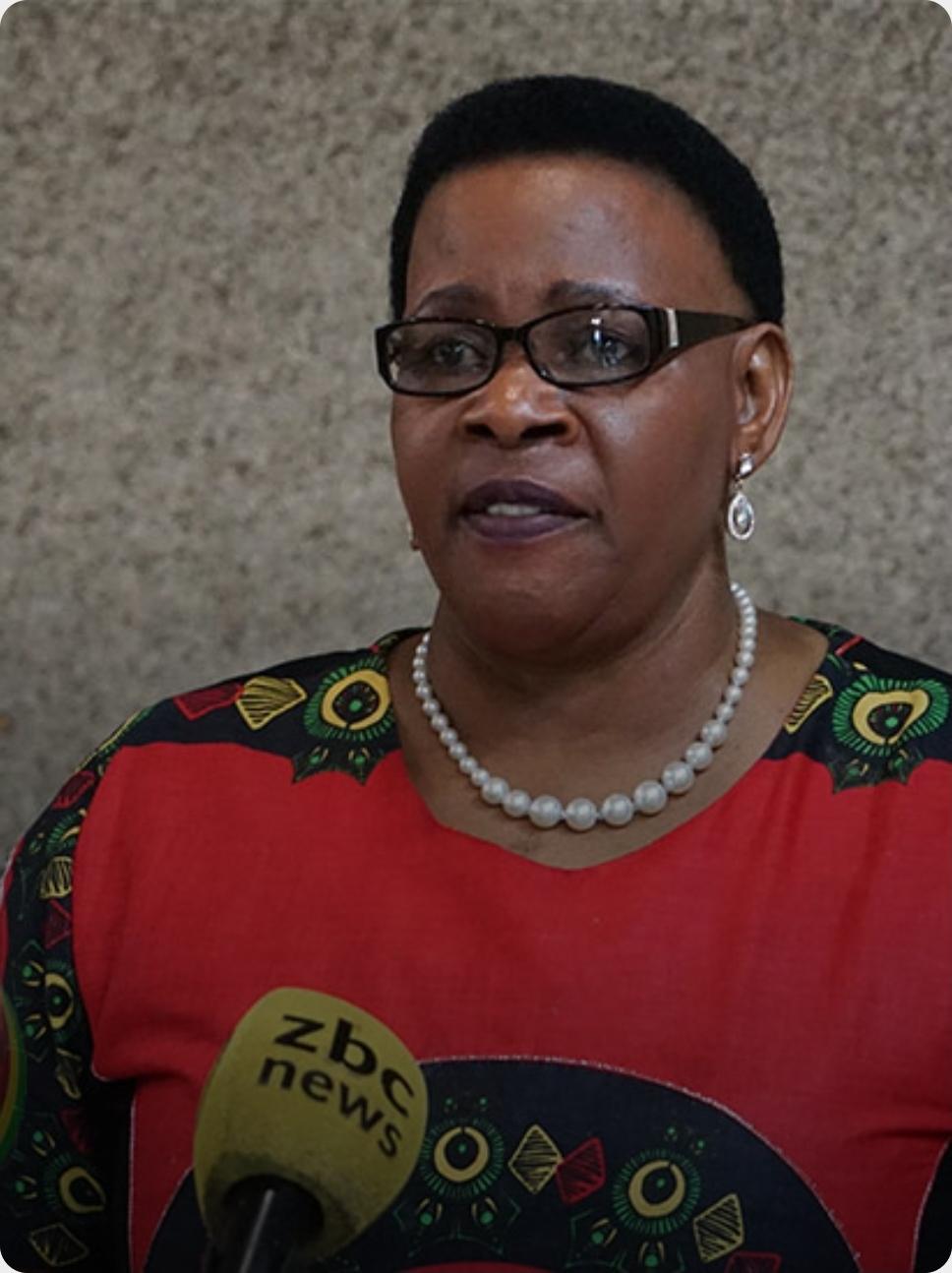
Recent remarks by Mabel Chinomona that “there can be no industrialisation without women in leadership” carry an important message not only for Zimbabwe, but for the entire African continent. Her statement comes at a critical time when African nations are seeking sustainable economic growth, stronger manufacturing sectors, technological advancement, food security, and...
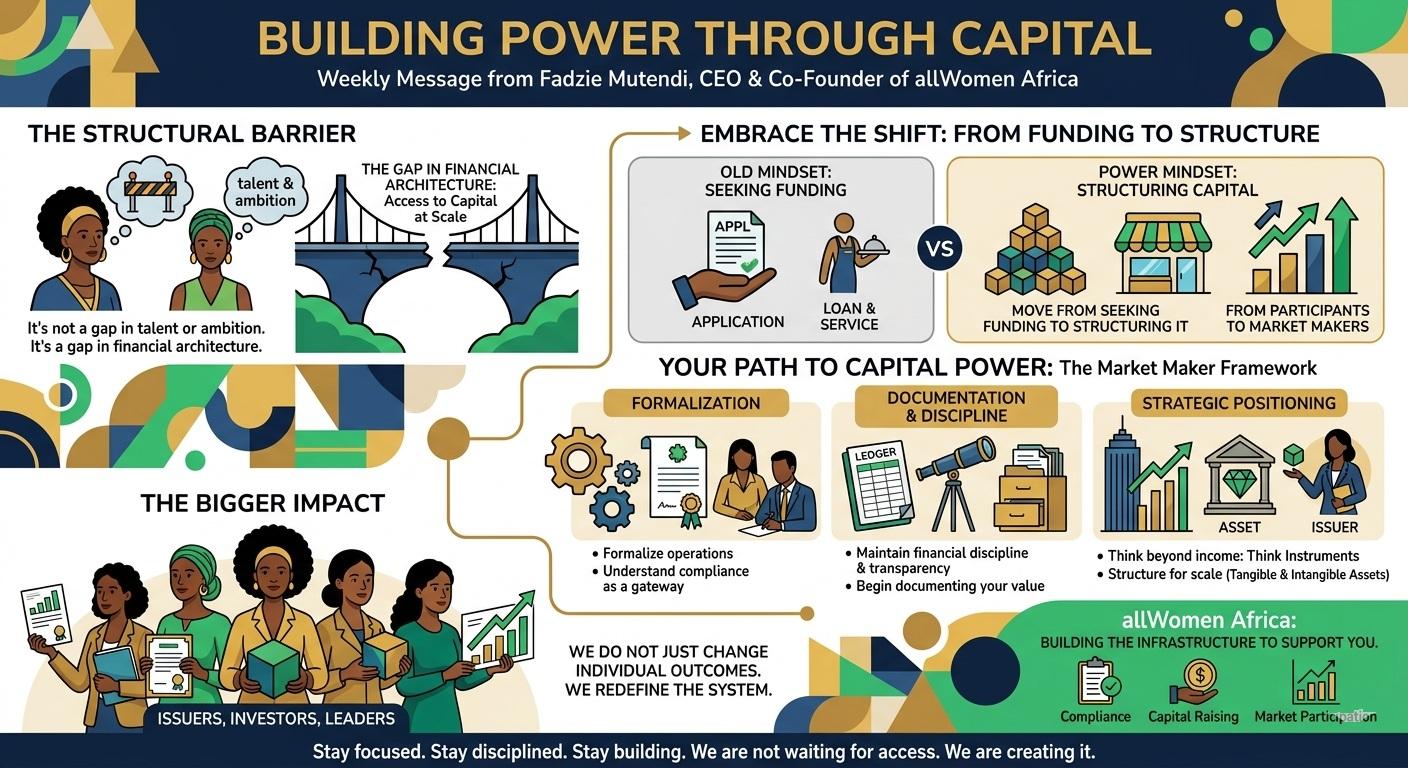
This week, I want to speak directly to you—not just as entrepreneurs and professionals, but as architects of Africa’s economic future. Across our continent, women continue to build, trade, innovate and lead. Yet, one structural barrier persists: access to capital at scale, on equitable terms and within systems designed with women in mind. This is not a gap in talent. It is not a gap...
Back-to-school season often comes with financial pressure for parents and guardians. To ease the burden, uXpress SACCO has introduced eduCredit, a flexible financing solution designed for families ordering their eduBox Back-to-School Supplies. With eduCredit, parents can order all their child’s school requirements upfront and spread payments over three months at just 10% interest on the...